Be yourself; Everyone else is already taken.
— Oscar Wilde.
This is the first post on my new blog. I’m just getting this new blog going, so stay tuned for more. Subscribe below to get notified when I post new updates.
Be yourself; Everyone else is already taken.
— Oscar Wilde.
This is the first post on my new blog. I’m just getting this new blog going, so stay tuned for more. Subscribe below to get notified when I post new updates.
This is an example post, originally published as part of Blogging University. Enroll in one of our ten programs, and start your blog right.
You’re going to publish a post today. Don’t worry about how your blog looks. Don’t worry if you haven’t given it a name yet, or you’re feeling overwhelmed. Just click the “New Post” button, and tell us why you’re here.
Why do this?
The post can be short or long, a personal intro to your life or a bloggy mission statement, a manifesto for the future or a simple outline of your the types of things you hope to publish.
To help you get started, here are a few questions:
You’re not locked into any of this; one of the wonderful things about blogs is how they constantly evolve as we learn, grow, and interact with one another — but it’s good to know where and why you started, and articulating your goals may just give you a few other post ideas.
Can’t think how to get started? Just write the first thing that pops into your head. Anne Lamott, author of a book on writing we love, says that you need to give yourself permission to write a “crappy first draft”. Anne makes a great point — just start writing, and worry about editing it later.
When you’re ready to publish, give your post three to five tags that describe your blog’s focus — writing, photography, fiction, parenting, food, cars, movies, sports, whatever. These tags will help others who care about your topics find you in the Reader. Make sure one of the tags is “zerotohero,” so other new bloggers can find you, too.
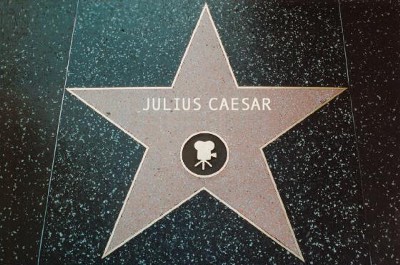
Let’s face it, Caesar was a popular guy. He had all the desirable attributes which favor a politician: intelligent, courageous, powerful and handsome…what wasn’t there to like? Whether we like it or not, politics today is still significantly influenced by a candidate’s popularity. How many people prefer you as opposed to your opponent often dictates your success in attaining power. Before becoming a politician, Donald Trump was a businessman and famous television personality renowned for his wealth and flamboyant lifestyle. Rumour has it that the famous rapper Kayne West may potentially run in a US presidential election! I wonder what his fiscal policy would be?
Caesar appreciated the importance of popularity to enhance his political career. When Caesar conquered the Gaul, he ensured that the Roman Empire shared his victory. Rome celebrated with 20 straight days of activities: hosting lavish banquets; endowing citizens of the empire with free food, and staging spectacular gladiator battles to celebrate the great victorious Caesar (Roman Empire, 2018). He certainly knew how to throw a party! This made the already popular dictator even more favored, which resulted in him gaining more support from the empire than the whole Roman Senate combined (Roman Empire, 2018).
How could modern-day information systems enhance Caesar’s popularity? Information systems possess the ability to influence the motivations and beliefs of individuals. Governments today use information systems to leverage their popularity.
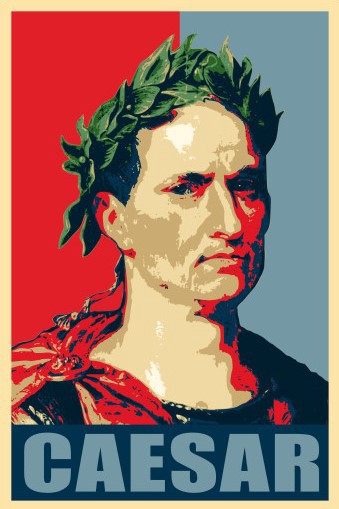
Let’s commence with a simple concept known as propaganda;
“ information, especially of a biased or misleading nature, used to promote a political cause or point of view” (Lexico, 2020)
It doesn’t sound like a new concept does it? Propaganda has been used throughout history. In the 1930s, Hitler’s use of propaganda to spread lies about the Jews led to the greatest genocide the world has ever seen, killing approximately 6 million Jews (haaretz, 2020). Propaganda is a powerful tool that cannot be underestimated.
Caesar was no stranger to propaganda… after all, he was a politician. On Caesar’s return from Gaul, the Optimates (a Roman conservative political faction) intended to prosecute Caesar for abusing his authority. This would have stripped him of his wealth and citizenship. To protect himself, Caesar knew that he needed the support of the Roman people. In Caesar’s Commentarii de Bello Gallico (Commentary on the war in Gaul) he propagandized his activities as efforts to increase the glory and influence of Rome, to win the support of the people and protect himself from the Optimates who began siding with Pompey and turning against Caesar (WordDisk, 2020).
Furthermore, in his famous account of the Gallic Wars, he provided readers at home with a blood-curdling, description of the Germanic tribes he encountered in battle (BBC, 2011). By doing this the Roman empire praised Caesar for defeating these tribes in battle.
Information systems could certainly have facilitated Caesar’s propaganda. The first technology he could have availed of is using film, which was very effectively used by the Nazi’s in Germany (Holocaust Encyclopedia, 2020). Films could have promoted the superiority of Roman military power and the importance of conquering enemy lands as defined by Caesar’s ideology. Films could potentially have portrayed Caesar as a glorified Roman leader and war hero that was conquering territories and defeating gruesome Germanic tribes that were plotting against the Roman empire. Documentaries about the great Caesar could have enhanced an already super-hero like imagine.
Secondly, Caesar could have used various media to promote his propaganda thereby further idolizing him. A media outlet controlled by Caesar could have related his particular bias, thereby enabling Caesar to mislead and unduly influence his public. The media plays a significant role in influencing politics. Controlling the media enables governments and individuals to protect their reputation and manipulate people.
The use of simple technologies such as film and media could have dramatically influenced the Roman people’s perception of Caesar.
Knowledge is power and the more that Caesar knew about his people, the more he could have influenced them– just like Obama. Obama’s campaign consisted of a team of cutting-edge data scientists, developers, and digital advertising experts (Beckett, 2012). These ‘nerds’ were responsible for the data mining which greatly attributed to Obama’s success in the presidential election as explained in the above video.
Designing targeted adds with the data obtained about users, could have influenced and persuaded the people of the Roman Empire to support the great Caesar even more! Caesar could have implemented this strategy to improve his public image following accusations of his abuse of authority during his conquering of the Gaul. He knew that gaining the support of the Roman public would protect him from the Optimates. By harnessing the power of big data, in a revolutionary manner that American politicians have used it to win elections, big data would have been invaluable for Caesar.
In early 2018, the Facebook-Cambridge Analytica data scandal became worldwide news. Personal data of millions of Facebook users’ profiles were harvested without their consent and used for political advertising purposes such as Donald Trump’s presidential campaign and the Brexit campaign. This data was used to build a powerful software program to predict and influence choices at the ballot box (Graham-Harrison and Cadwalladr, 2018). This demonstrates the power that big data has on politics and the lengths individuals are prepared to go to in order to gather this data.
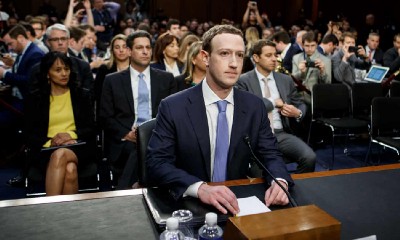
“We have a responsibility to protect your data, and if we can’t then we don’t deserve to serve you” — Mark Zuckerberg
What’s Next?
We have mentioned how Caesar could communicate with his empire. Now as we’ve explored how he can become more popular, we are left with one final question; How could information systems permit Caesar to control his empire?
References
BBC. (2011). BBC — History — Ancient History in depth: The Official Truth: Propaganda in the Roman Empire. [online] Available at: http://www.bbc.co.uk/history/ancient/romans/romanpropaganda_article_01.shtml [Accessed 3 Feb. 2020].
Beckett, L. (2012). Everything We Know (So Far) About Obama’s Big Data Tactics — ProPublica. [online] ProPublica. Available at: https://www.propublica.org/article/everything-we-know-so-far-about-obamas-big-data-operation
Graham-Harrison, E. and Cadwalladr, C. (2018). Revealed: 50 million Facebook profiles harvested for Cambridge Analytica in major data breach. [online] the Guardian. Available at: https://www.theguardian.com/news/2018/mar/17/cambridge-analytica-facebook-influence-us-election
haaretz.com. (2020). Holocaust facts: Where does the figure of 6 million victims come from?. [online] Available at: https://www.haaretz.com/jewish/holocaust-remembrance-day/holocaust-facts-6-million-where-is-the-figure-from-1.5319546
Holocaust Encyclopedia. (2020). Nazi Propaganda. [online] Available at: https://encyclopedia.ushmm.org/content/en/article/nazi-propaganda
Lexico. (2020). Propaganda | Meaning of Propaganda by Lexico. [online] Available at: https://www.lexico.com/definition/propaganda
Roman Empire. (2018). [television documentary] Directed by J. Ealer. United States: Netflix.
WordDisk. (2020). WordDisk. [online] Available at: https://worddisk.com/wiki/Commentarii_de_Bello_Gallico/

Adam Conneally- A proud Galway man and final year business student, who is interested in music, boxing, and sleeping! This is a photo of Adam soaking in the atmosphere on his recent trip to South Korea!
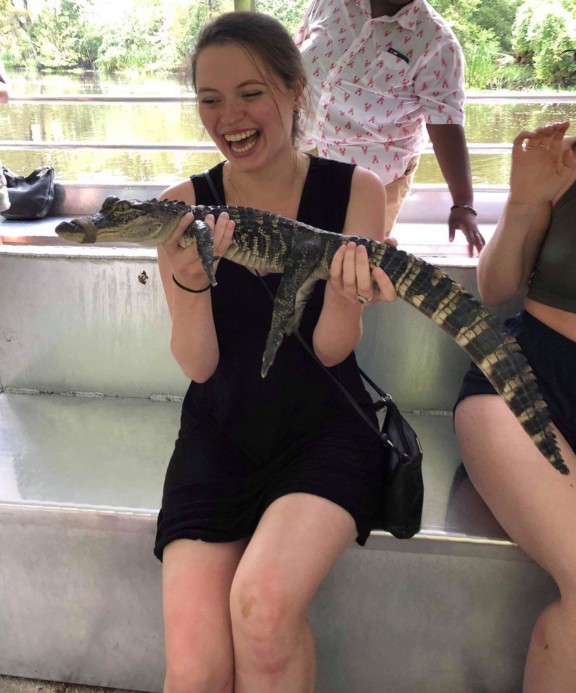
Keelin Cassidy- You can usually hear Keelin before you see her. An unapologetically loud final year MSISS student , this photo shows Keelin making friends with the local wildlife in New Orleans.

Patrick Temperley — Also a final year Business student. Always looking forward to a nice burrito and a cup of coffee!
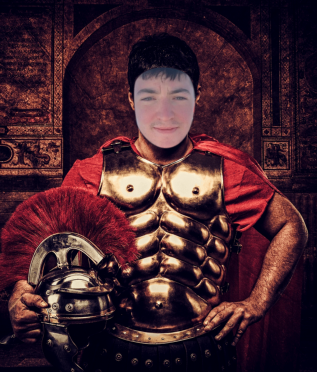
Liam Duggan– Final year MSISS student. Guinness connoisseur. Gladiator (when not writing blogs).

Jack Donal Collins – Final Year Computer Science & Business Student. Jack is the real Bear Grylls of the group. You’ll find Jack in such remote locations as St Stephens Green, Merrion Square and Central Park, NYC (pictured above). A man truly in touch with nature and rural living.
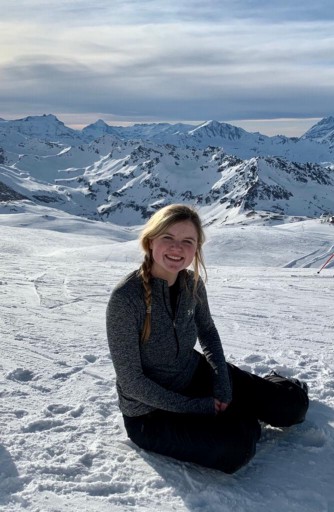
Emma-Louise Ruane — Here we see Emma-Louise making a rare trip outside of her natural habitat…. her front square bedroom-. There are rumours that she has a Bloomberg terminal beside her bed.
Team Note: Huge speculation exists as to whether this image is actually photoshopped. Colleagues of Emma-Louise’s who were in the same small ski village as her state they never saw her.

Portia Healy O’ Connor — Scholar.

 adam's blog